Website Design for Hotels is no longer just an option; it’s a fundamental pillar for success in the highly competitive hospitality industry. In an era dominated by digital interactions, a hotel’s website serves as its most crucial online storefront, often being the first point of contact for potential guests. A well-designed, functional, and visually appealing website can significantly influence a traveler’s decision-making process, driving direct bookings, enhancing brand perception, and providing an unparalleled guest experience from the very first click.
Table of Contents
This comprehensive guide delves into every facet of creating an exceptional online presence for your hotel, covering the essential elements that differentiate a good website from a truly great one. We will explore the specific needs and expectations of modern travelers, highlight critical features, and outline a strategic approach to design and development that ensures your hotel stands out in a crowded digital landscape. From understanding the importance of user experience to leveraging advanced SEO techniques and integrating innovative technologies, mastering website design for hotels is key to unlocking your property’s full potential.
Why This Industry Needs a Professional Website
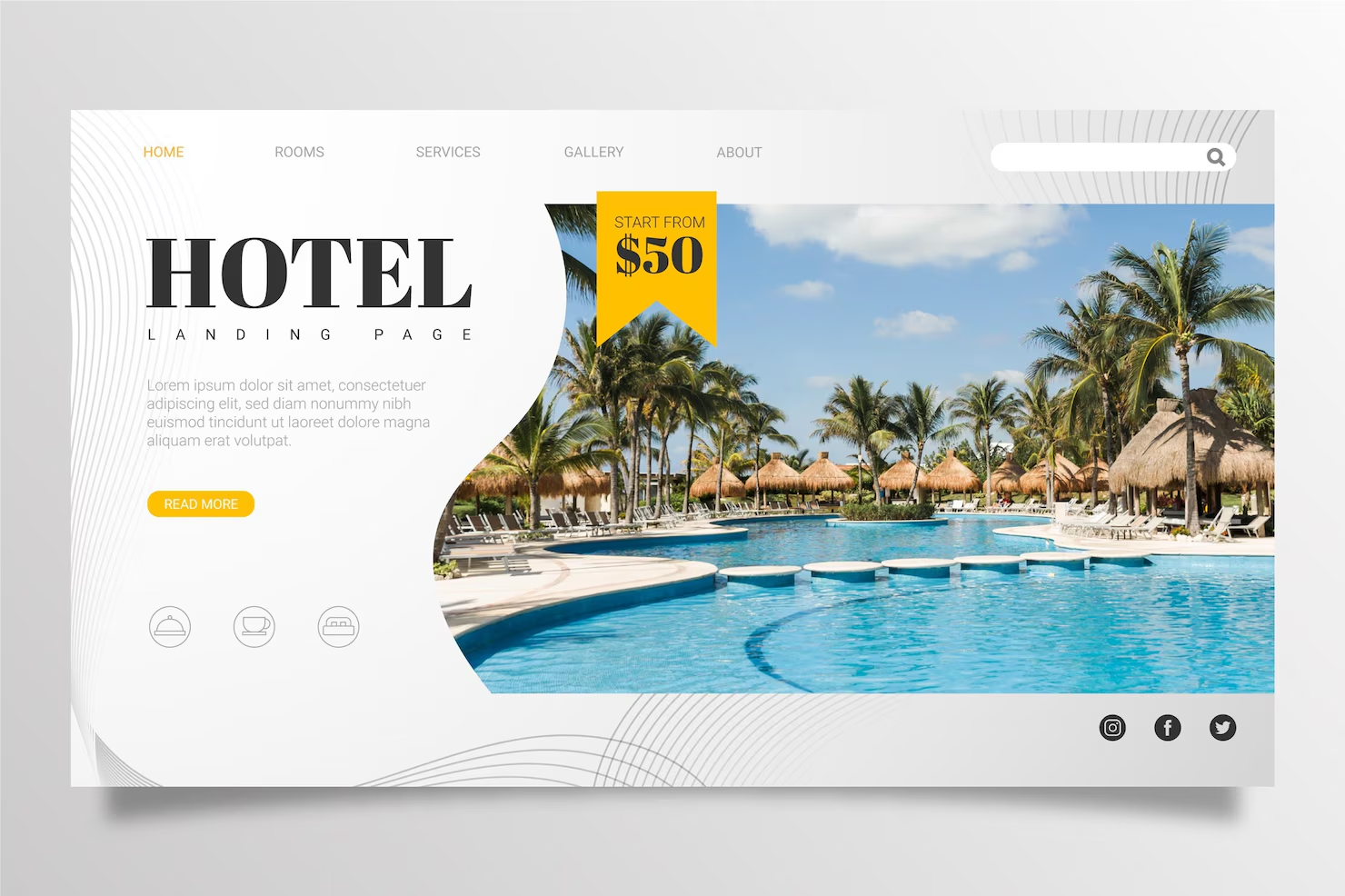
In today’s digital-first world, a professional website is the cornerstone of a hotel’s marketing strategy, essential for establishing credibility, attracting guests, and driving revenue. The hospitality sector, in particular, thrives on guest experience, and this experience now begins long before check-in – it starts with the online research phase.
Establishing a Strong Brand Identity
Your hotel’s website is the ultimate platform to showcase your unique brand story, personality, and values. Unlike third-party booking sites that standardize listings, your own website allows full creative control over visuals, tone of voice, and messaging. This direct brand communication builds trust and helps potential guests connect with your property on a deeper level, differentiating you from competitors.
Snippet: Why is professional website design crucial for hotels?
A professional website is crucial for hotels because it serves as the primary digital storefront, allowing direct brand communication, attracting more guests, and reducing reliance on costly Online Travel Agencies (OTAs). It provides a platform to showcase unique features, manage direct bookings efficiently, and enhance the overall guest experience, starting from the initial research phase. Without a compelling online presence, hotels risk losing potential customers to competitors and struggling to establish a distinctive market identity in the digital age.
Reducing Reliance on Online Travel Agencies (OTAs)
OTAs, while offering visibility, come with significant commission fees that eat into profit margins. A robust, user-friendly website empowers hotels to secure direct bookings, bypassing these commissions. By offering exclusive deals, loyalty programs, and a superior booking experience directly, hotels can incentivize guests to book through their own channels, leading to higher profitability and greater control over guest relationships.
Meeting Guest Expectations
Modern travelers expect a seamless, intuitive, and informative online experience. From browsing room types and amenities to checking availability and making reservations, every step must be effortless. A dated, slow, or non-responsive website immediately creates a negative impression, suggesting a lack of attention to detail that might extend to the guest’s stay. A professional website signals quality and competence.
Competitive Advantage in a Crowded Market
The hotel industry is fiercely competitive. A superior website design can be a significant differentiator, allowing your property to stand out. Hotels with optimized, visually stunning, and highly functional websites are more likely to capture attention, convert lookers into bookers, and maintain a competitive edge against properties that neglect their online presence.
Showcasing Amenities and Experiences
Photos, virtual tours, and detailed descriptions of rooms, facilities, dining options, and local attractions can be elegantly presented on your own website. This rich content helps potential guests visualize their stay and highlights unique selling points that might not be adequately conveyed on generic booking platforms. It transforms a simple search into an immersive experience.
Key Features & Requirements
An effective website design for hotels must integrate a specific set of features and functionalities tailored to the unique demands of the hospitality industry. These elements collectively contribute to a seamless user experience, drive conversions, and support operational efficiency.
Responsive Design for All Devices
- Adaptability: The website must flawlessly adjust to any screen size, whether accessed on a desktop, tablet, or smartphone.
- User Experience: Ensures consistent navigation and readability, crucial for travelers on the go.
- SEO Benefits: Google prioritizes mobile-friendly websites in search rankings.
Integrated Online Booking Engine
- Direct Bookings: Allows guests to book rooms directly, bypassing OTA commissions.
- Real-time Availability: Displays up-to-date room availability and pricing.
- Secure Payments: PCI-compliant gateway for safe credit card transactions.
- Upselling Opportunities: Integrates options for add-ons like spa treatments, dining reservations, or package upgrades.
High-Quality Visuals (Photos & Videos)
- Visual Appeal: Professional, high-resolution images and videos of rooms, common areas, amenities, and surroundings.
- Virtual Tours: 360-degree virtual tours of rooms and facilities enhance transparency and trust.
- Gallery: An easily navigable photo gallery showcasing the hotel’s best aspects.
Clear and Intuitive Navigation
- Simplicity: Easy-to-understand menu structure that guides users effortlessly through the site.
- Key Pages: Prominent links to ‘Rooms,’ ‘Book Now,’ ‘Amenities,’ ‘Gallery,’ ‘Contact,’ and ‘Location.’
- Search Functionality: Helps users quickly find specific information.
Snippet: What are the must-have features for a hotel website?
Must-have features for a hotel website include a responsive design for all devices, an integrated online booking engine with real-time availability and secure payments, high-quality photos and virtual tours, and clear, intuitive navigation. Essential content like detailed room descriptions, local information, and a blog enhances the guest experience. Additionally, robust SEO, multi-language support, direct contact options, and a prominent call-to-action are critical for attracting guests and converting bookings.
Search Engine Optimization (SEO)
- Keyword Optimization: Content optimized with relevant keywords (e.g., “boutique hotel London,” “luxury resort Maldives”).
- Local SEO: Integration with Google My Business, schema markup for location, and local citations.
- Fast Loading Speed: Optimized images and code for quick page load times, a key ranking factor.
- Technical SEO: Clean code, sitemaps, and robots.txt for search engine crawlability.
Multi-Language Support
- Global Reach: Attracts international travelers by offering content in various languages.
- Personalization: Improves user experience for non-English speakers.
Guest Reviews and Testimonials
- Social Proof: Displays authentic reviews to build trust and credibility.
- Integration: Links to or embeds reviews from popular platforms like TripAdvisor, Google Reviews, or Booking.com.
Detailed Room & Amenity Pages
- Comprehensive Descriptions: Detailed information about each room type, including size, bed configurations, views, and in-room amenities.
- Amenity Showcase: Dedicated pages for facilities like restaurants, spas, gyms, pools, and conference rooms.
Contact Information and Location Map
- Accessibility: Clearly displayed phone numbers, email addresses, and physical address.
- Interactive Map: Embedded Google Maps showing the hotel’s exact location and nearby attractions.
Special Offers & Packages Section
- Promotions: Highlights current discounts, seasonal packages, and exclusive deals to entice bookings.
- Clear CTAs: Direct links to book these offers.
Blog or News Section
- Content Marketing: Provides valuable content about local attractions, travel tips, hotel events, and industry news.
- SEO Boost: Helps improve search engine visibility and establishes the hotel as a local expert.
Website Security (SSL Certificate)
- Trust: An SSL certificate (HTTPS) encrypts data, assuring guests that their personal and payment information is secure.
- SEO Factor: Google favors secure websites.
Benefits of a Professional Website
Investing in professional website design for hotels yields a multitude of benefits that extend far beyond aesthetics. These advantages directly impact profitability, guest satisfaction, and long-term brand growth, making it an indispensable asset in today’s digital economy.
Increased Direct Bookings & Reduced Commission Costs
The most immediate and tangible benefit is the significant increase in direct bookings. By offering a superior online experience, compelling content, and often exclusive direct-booking incentives, hotels can persuade guests to book directly rather than through OTAs. This directly translates to substantial savings on commission fees, boosting the hotel’s profit margins considerably.
Enhanced Brand Image and Credibility
A high-quality, professional website reinforces your hotel’s brand image as trustworthy, modern, and attentive to detail. It communicates professionalism and luxury, or whatever your brand identity entails, building immediate credibility with potential guests. Conversely, an outdated or poorly designed website can quickly erode trust and suggest a lack of quality across the entire operation.
Superior Guest Experience from the Outset
The guest experience begins the moment they start planning their trip. A well-designed website provides an intuitive, enjoyable, and informative journey. From easy navigation and stunning visuals to a seamless booking process and readily available information, it sets a positive tone for their entire stay, fostering satisfaction even before arrival.
Snippet: How does a professional hotel website benefit the business?
A professional hotel website benefits the business by significantly increasing direct bookings, which reduces costly OTA commissions and boosts profitability. It enhances brand image and credibility, providing a superior guest experience from the initial research phase. Such a website offers a powerful marketing platform, provides valuable guest data for personalization, and delivers a competitive advantage by showcasing the hotel’s unique offerings effectively to a global audience.
Powerful Marketing and Communication Platform
Your website is a dynamic marketing tool, allowing you to run promotions, announce events, showcase new amenities, and share compelling stories through a blog. It’s a central hub for all your digital marketing efforts, from SEO and content marketing to email campaigns and social media integration, providing a consistent message across all channels.
Valuable Data and Analytics Insights
Unlike third-party platforms, your own website provides comprehensive access to guest data and website analytics. This invaluable information reveals user behavior patterns, popular pages, conversion rates, and traffic sources. These insights empower you to refine your marketing strategies, personalize guest experiences, and make data-driven decisions to optimize performance and offerings.
Competitive Advantage and Market Differentiation
In a saturated market, a stand-out website gives you a distinct competitive edge. It allows you to highlight your unique selling propositions, whether it’s a stunning view, exceptional dining, or eco-friendly practices, in a way that generic OTA listings cannot. This differentiation helps attract your ideal guest demographic and secures your position in the market.
Improved Customer Service and Engagement
A well-structured website can serve as a comprehensive self-service portal, answering common guest questions through FAQs, providing detailed directions, and offering live chat support. This not only improves customer service efficiency but also enhances guest engagement, making their pre-arrival experience smoother and more satisfying.
Step-by-Step Website Development Process
Developing a high-performing website design for hotels involves a structured approach, ensuring every stage is executed with precision and strategic foresight. Following a clear process minimizes risks, maximizes efficiency, and delivers a final product that meets specific business objectives.
1. Discovery & Planning (Strategy & Research)
- Define Goals: Clarify objectives (e.g., increase direct bookings by 30%, improve guest engagement).
- Target Audience: Identify ideal guest demographics, their needs, and online behavior.
- Competitor Analysis: Research competitor websites for best practices and differentiation opportunities.
- Feature Set: Outline all required functionalities and integrations (booking engine, CRM, PMS).
- Content Strategy: Plan the types of content needed (text, images, video, blog topics).
- Sitemap: Create a logical structure for all pages and navigation.
2. UI/UX Design (Wireframing & Prototyping)
- Wireframes: Create skeletal layouts of pages, focusing on functionality and content placement.
- Mockups: Develop visual designs with colors, typography, and imagery, reflecting the hotel’s brand.
- Prototypes: Build interactive versions of the website to test user flows and gain feedback.
- User Testing: Gather insights from potential users to refine the design for optimal usability.
- Mobile-First Approach: Design for mobile devices first, then scale up to larger screens.
Snippet: What are the key steps in developing a hotel website?
The key steps in developing a hotel website include initial discovery and planning to define goals and target audience, followed by UI/UX design to create intuitive layouts and visual aesthetics. Next, content creation populates the site with compelling text and visuals. Then comes development and booking engine integration, ensuring full functionality. Post-development, robust SEO optimization, thorough testing, and final launch are crucial. Ongoing maintenance and performance monitoring complete the cycle, ensuring the site remains effective and up-to-date.
3. Content Creation & Asset Gathering
- Professional Photography & Videography: Capture high-quality images and videos of rooms, amenities, staff, and local attractions.
- Compelling Copywriting: Craft engaging, SEO-friendly text that highlights unique selling points and entices bookings.
- Virtual Tours: Produce 360-degree virtual tours for an immersive experience.
- Translation: Translate content into target languages for multi-language support.
4. Development & Booking Engine Integration
- Front-end Development: Convert design mockups into functional HTML, CSS, and JavaScript.
- Back-end Development: Build server-side logic, database, and system integrations.
- Booking Engine Integration: Seamlessly connect a robust online booking engine (e.g., PMS-integrated) with real-time availability and secure payment processing.
- CRM/PMS Integration: Ensure the website communicates effectively with the hotel’s Customer Relationship Management and Property Management Systems.
- Security Implementation: Install SSL certificates and implement security measures to protect user data.
5. SEO Optimization
- On-Page SEO: Optimize titles, meta descriptions, headings, image alt text, and content for target keywords.
- Technical SEO: Ensure site speed, mobile-friendliness, crawlability, and structured data markup (schema.org for hotel, reviews, etc.).
- Local SEO: Optimize for local searches with Google My Business integration and location-specific content.
- Analytics Setup: Integrate Google Analytics and Google Search Console for performance tracking.
6. Testing & Quality Assurance
- Functionality Testing: Verify all features, links, forms, and the booking engine work correctly.
- Cross-Browser/Device Testing: Ensure consistent performance across different browsers and devices.
- Performance Testing: Check loading speeds and responsiveness under various conditions.
- Security Audits: Conduct vulnerability assessments.
- Content Review: Proofread all text for errors and consistency.
7. Launch & Deployment
- Go Live: Publish the website to the chosen hosting environment.
- Redirects: Implement 301 redirects for any old URLs to preserve SEO value.
- Google Submission: Submit sitemaps to search engines.
- Monitoring: Continuously monitor website performance, uptime, and user feedback post-launch.
8. Maintenance, Updates & Performance Monitoring
- Regular Backups: Ensure data integrity.
- Software Updates: Keep CMS, plugins, and security patches up-to-date.
- Content Refresh: Regularly update content, add new offers, and blog posts.
- Performance Analysis: Continuously analyze analytics to identify areas for improvement in UX, SEO, and conversion rates.
- Security Monitoring: Vigilantly monitor for threats and address vulnerabilities promptly.
Best Practices
Achieving excellence in website design for hotels requires adherence to a set of best practices that prioritize user experience, search engine visibility, and conversion optimization. These guidelines ensure your website is not only beautiful but also highly effective in achieving your business goals.
Mobile-First Design and Responsiveness
With the majority of travelers researching and booking on mobile devices, a mobile-first approach is non-negotiable. Design for the smallest screens first, then progressively enhance for larger ones. Ensure all elements are touch-friendly, readable, and load quickly on smartphones and tablets. Responsiveness is crucial for user satisfaction and Google rankings.
Intuitive Navigation and Clear Calls-to-Action (CTAs)
Guests should be able to find information effortlessly. Use clear, concise menu labels and a logical site structure. CTAs like “Book Now,” “Check Availability,” or “View Rooms” must be prominently placed, visually distinct, and persuasive, guiding users towards conversion. Reduce friction in the booking process by making it as simple as possible.
Stunning, High-Quality Visuals
Hotels sell experiences, and visuals are paramount. Invest in professional photography and videography that truly capture the ambiance, amenities, and unique selling points of your property. Utilize high-resolution images, virtual tours, and engaging videos to create an immersive experience that inspires potential guests.
Snippet: What are the best practices for hotel website design?
Best practices for hotel website design include prioritizing mobile-first responsive design, ensuring intuitive navigation with clear calls-to-action, and using stunning high-quality visuals. Fast loading speeds, robust SEO implementation, and a secure, seamless booking engine are also crucial. Additionally, personalizing content, integrating guest reviews, providing multi-language support, and consistently updating content contribute to an effective and high-converting hotel website.
Blazing Fast Loading Speed
Slow websites frustrate users and negatively impact search engine rankings. Optimize images, leverage browser caching, minimize code, and use a reliable hosting provider to ensure your pages load in under 3 seconds. Tools like Google PageSpeed Insights can help identify and rectify performance bottlenecks.
Robust Search Engine Optimization (SEO)
Beyond basic keywords, implement comprehensive SEO strategies. This includes local SEO (Google My Business, schema markup for address, amenities, and reviews), technical SEO (site structure, sitemaps, canonical tags), and content SEO (blog posts, guides for local attractions). Aim for featured snippets by directly answering common questions within your content.
Secure and Seamless Online Booking Experience
The booking engine must be secure (SSL certificate is mandatory), user-friendly, and integrated seamlessly with the website’s design. Minimize the number of steps required to complete a booking, offer transparent pricing, and provide various payment options. Trust signals, such as security badges, can boost confidence.
Personalization and User Segmentation
Tailor content and offers based on user location, past behavior, or booking history. For example, show local attractions to users from a nearby city or offer a returning guest discount. Dynamic content can significantly increase engagement and conversion rates.
Displaying Guest Reviews and Testimonials
Authentic social proof builds immense trust. Prominently feature positive guest reviews, ideally from reputable platforms like TripAdvisor or Google. Consider integrating a system for collecting and displaying direct testimonials on your site.
Accessibility for All Users
Design your website to be accessible to users with disabilities (e.g., visual impairments). Adhere to WCAG (Web Content Accessibility Guidelines) by providing alt text for images, sufficient color contrast, keyboard navigation, and screen reader compatibility. This expands your audience and demonstrates inclusivity.
Regular Updates and Content Freshness
A static website quickly becomes stale. Regularly update content, add new blog posts, showcase seasonal offers, and refresh visuals. This keeps the website engaging for returning visitors and signals to search engines that your site is active and relevant.
Common Mistakes to Avoid
While the path to a successful website design for hotels is paved with best practices, it’s equally important to be aware of and actively avoid common pitfalls. These mistakes can undermine your efforts, deter potential guests, and significantly impact your online performance and profitability.
1. Outdated and Non-Responsive Design
Mistake: Using a website design that looks like it’s from a decade ago and doesn’t adapt to different screen sizes.
Why it’s bad: Immediately conveys a lack of professionalism and modernity. Poor mobile experience frustrates users, leads to high bounce rates, and negatively impacts SEO, as Google penalizes non-responsive sites.
2. Slow Loading Speeds
Mistake: Having large, unoptimized images, excessive scripts, or inefficient hosting that causes pages to load slowly.
Why it’s bad: Users expect instant gratification. A delay of just a few seconds can lead to significant abandonment rates. Google also uses page speed as a ranking factor, so slow sites suffer in search visibility.
3. Complex and Non-Secure Booking Process
Mistake: A multi-step, confusing, or untrustworthy booking engine, or lacking an SSL certificate.
Why it’s bad: The booking process is the most critical conversion point. Any friction, lack of clarity, or security concerns will lead to abandoned bookings and lost revenue. Guests will not share credit card information on an unsecured site.
4. Lack of High-Quality Visuals
Mistake: Using blurry, amateurish, or outdated photos and videos that don’t accurately represent the hotel.
Why it’s bad: Hotels are visual products. Poor visuals fail to inspire and can even deter guests, giving a false or negative impression of the property. Guests rely heavily on images to make booking decisions.
Snippet: What common website design mistakes should hotels avoid?
Hotels should avoid outdated, non-responsive website designs, slow loading speeds, and complex or insecure booking processes. Other common mistakes include using low-quality visuals, neglecting robust SEO, lacking clear calls-to-action, hiding essential contact information, and ignoring user experience feedback. These errors lead to high bounce rates, lost bookings, diminished brand credibility, and poor search engine visibility, ultimately hindering revenue and guest acquisition.
5. Ignoring SEO Best Practices
Mistake: Failing to optimize content, technical aspects, and local listings for search engines.
Why it’s bad: Without proper SEO, your hotel’s website will be invisible to potential guests searching online. This results in missed opportunities for direct bookings and over-reliance on paid advertising or OTAs.
6. Vague or Missing Call-to-Actions (CTAs)
Mistake: Not clearly guiding visitors on what action to take next (e.g., “Book Now,” “Check Availability”).
Why it’s bad: If users don’t know what to do, they won’t convert. Weak or absent CTAs lead to confusion and lower conversion rates, making it difficult for guests to make a reservation.
7. Hidden or Inaccessible Contact Information
Mistake: Making it difficult for guests to find contact details, maps, or directions.
Why it’s bad: Guests may have questions before booking or need assistance during their stay. Hiding contact info creates frustration and implies a lack of transparency or customer service, leading to lost trust and potential bookings.
8. Overly Complex Navigation
Mistake: Creating too many menu items, confusing categories, or requiring too many clicks to find essential information.
Why it’s bad: Users get lost easily. Complex navigation leads to a poor user experience, high bounce rates, and makes it difficult for search engines to crawl and index your site effectively.
9. Neglecting Analytics and User Feedback
Mistake: Launching a website and never reviewing its performance data or seeking guest feedback.
Why it’s bad: Without analytics, you won’t know what’s working and what isn’t. Ignoring user feedback means missing opportunities for continuous improvement, leading to a static website that doesn’t evolve with guest needs or market trends.
Expert Tips & Industry Insights
Staying ahead in hotel website design requires embracing innovation and leveraging emerging trends to create highly engaging and effective platforms. These expert tips and industry insights focus on future-proofing your website and maximizing its impact.
Embrace AI for Personalization and Efficiency
- AI-Powered Chatbots: Integrate chatbots for instant 24/7 customer service, answering FAQs, and even assisting with booking inquiries. This frees up staff and enhances guest experience.
- Personalized Recommendations: Utilize AI to analyze user behavior and offer tailored room recommendations, special packages, or local attractions, enhancing relevance and conversion.
- Dynamic Pricing: Implement AI-driven dynamic pricing models directly on your website to optimize revenue based on demand, competitor rates, and other factors.
Leverage Virtual and Augmented Reality (VR/AR)
- Immersive Virtual Tours: Go beyond 360-degree photos with full VR tours that transport potential guests directly into your lobby, rooms, and amenities, creating a powerful sense of presence.
- AR Features: Explore AR applications, such as overlaying hotel information or local points of interest when a guest points their phone at a landmark.
Prioritize Sustainability Messaging
More travelers are choosing eco-friendly options. Prominently feature your hotel’s sustainability initiatives, certifications, and green practices on your website. Dedicate a section to your environmental efforts to appeal to this growing segment of conscious travelers.
Seamless Social Media Integration
Integrate live social media feeds, share buttons, and links to your profiles. Encourage user-generated content by inviting guests to share their experiences using specific hashtags, which can then be displayed on your website.
Exclusive Direct Booking Incentives
Consistently offer compelling reasons to book directly. This could include a ‘best rate guarantee,’ complimentary perks (e.g., free breakfast, spa credit), loyalty program points, or flexible cancellation policies not available on OTAs.
Hyper-Local Content Focus
Become a local expert. Beyond just listing nearby attractions, create engaging content (blog posts, guides) about unique local experiences, hidden gems, and seasonal events. This not only enhances SEO for local searches but also positions your hotel as a gateway to an authentic destination experience.
Accessibility (WCAG) as a Core Principle
Beyond basic compliance, embed accessibility into the core design philosophy. This ensures your website is usable by everyone, regardless of ability, broadening your potential guest base and demonstrating corporate responsibility. Tools exist to help audit and maintain WCAG compliance.
Voice Search Optimization
As voice assistants become prevalent, optimize your content for conversational search queries. Think about how people ask questions verbally (e.g., “What hotels near me have a pool?”) and structure your content, especially FAQs, to provide direct answers.
Snippet: What are current trends in hotel website design?
Current trends in hotel website design emphasize AI for hyper-personalization and efficiency, including AI chatbots and dynamic pricing. There’s a growing adoption of immersive VR/AR tours for realistic previews and a strong focus on transparent sustainability messaging. Seamless social media integration, offering exclusive direct booking incentives, and creating hyper-local content are also key. Furthermore, websites are increasingly optimized for voice search and built with accessibility as a core principle to cater to a diverse user base.
Frequently Asked Questions (FAQs)
What is the typical cost for professional website design for hotels?
The cost for professional website design for hotels can vary significantly, ranging from $5,000 for a basic, custom-designed site for a small boutique hotel to $50,000+ for large luxury resorts requiring extensive custom features, complex integrations with PMS/CRM, multi-language support, and advanced marketing functionalities. Factors influencing cost include design complexity, the number of pages, booking engine sophistication, custom development needs, and ongoing maintenance plans. Investing in quality design often yields higher direct bookings and ROI over time.
How long does it take to develop a professional hotel website?
Developing a professional hotel website typically takes between 8 to 24 weeks, depending on the project’s scope and complexity. A smaller, less complex website with standard features might be completed in 2-3 months. However, larger projects involving extensive custom design, complex booking engine integrations, multi-language capabilities, high-quality content creation, and thorough SEO optimization can take 4-6 months or even longer. The timeline is influenced by client responsiveness and the availability of content and assets.
What role does SEO play in website design for hotels?
SEO plays a critical role in website design for hotels by ensuring the site is discoverable by potential guests through search engines. Effective SEO optimizes website content, technical structure, and local listings for relevant keywords, leading to higher search engine rankings. This increased visibility drives organic traffic to the hotel’s direct booking channels, reducing reliance on costly OTAs. Good SEO means more qualified leads finding your website, ultimately boosting direct bookings and overall revenue for the hotel.
Can a hotel website be integrated with a Property Management System (PMS)?
Yes, a hotel website can and should be integrated with a Property Management System (PMS) to streamline operations and enhance efficiency. This integration allows for real-time updates of room availability and pricing directly from the PMS to the website’s booking engine, ensuring accuracy and preventing overbookings. It also facilitates guest data collection and management, automating reservation processes, check-ins, and check-outs. PMS integration is crucial for providing a seamless booking experience and managing hotel inventory effectively.
How often should a hotel website be updated or redesigned?
A hotel website should ideally undergo minor content updates and performance checks weekly or monthly, and a significant redesign or refresh every 2-4 years. Regular content updates, such as adding blog posts, new offers, and fresh imagery, keep the site engaging and relevant for SEO. A full redesign ensures the website remains technologically current, aesthetically appealing, and aligned with evolving user experience trends, mobile responsiveness, and search engine algorithms, preventing it from appearing outdated or performing poorly.
Editorial Note:
This content has been prepared using publicly available information, editorial research and automated content assistance. Information is periodically reviewed and updated for accuracy.
Image Credit:
Image Source: Publicly available profile images and media sources. All rights belong to their respective owners.